From prototype to production contracts in under two years
On June 17, 2026, the Air Force awarded Increment 1 production contracts to both Anduril and General Atomics — four months ahead of the previously announced schedule. The contracts cover the first 150 aircraft under CCA Increment 1, split between the FQ-44 Fury and FQ-42 Vengeance in a dual-source arrangement rather than a competitive down-select. Air Force Secretary Troy Meink described the decision as reaffirming confidence that the service could field more than 150 combat-capable CCAs by end of decade, with a long-term program objective near 1,000 aircraft. Defense News, June 18, 2026
The Air Force requested $996.5 million in FY2027 to initiate Increment 1 procurement — the first year's buys against that 150-aircraft contract ceiling. Air and Space Forces Magazine
Moving from designation to production contracts in less than two years is unusual for any defense aircraft program and especially notable for one introducing a new autonomous systems architecture. The compressed timeline means that some phases traditionally sitting between prototype and production — extended design qualification, full developmental test closure — are being resolved concurrently with or after the production decision. That's a deliberate program strategy, not an oversight. But it means operational testing now carries weight that developmental testing would normally have addressed first.
The live-fire test: what it validated and what it didn't
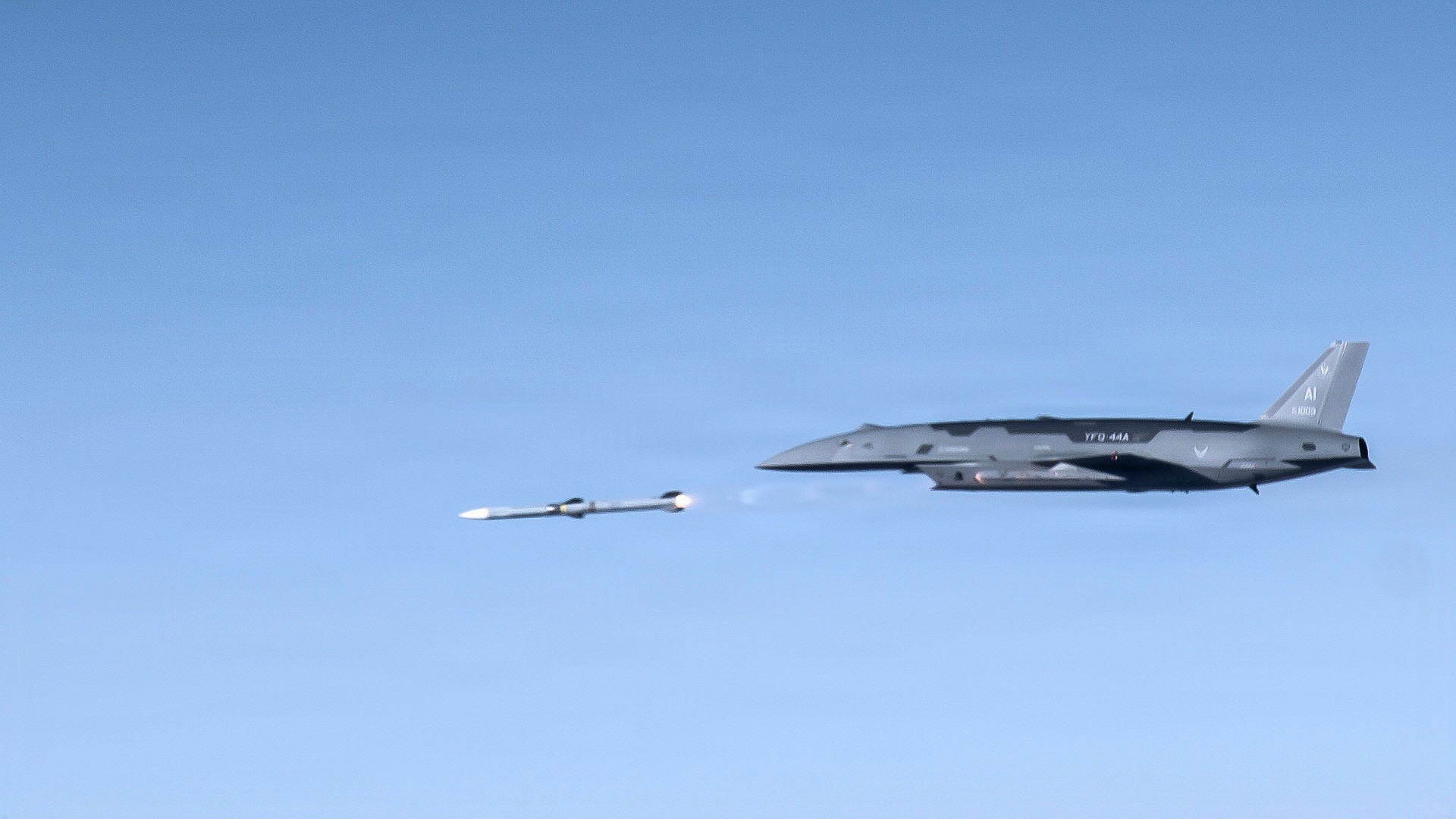
On July 15, 2026, the Air Force conducted the first live-fire test of a Collaborative Combat Aircraft, firing an AIM-120 missile from the YFQ-44A Fury at a digital target in secluded airspace over the Mojave Desert. Gen. Dale White, the Air Force's direct reporting portfolio manager for Critical Major Weapon Systems, stated that the test validated digital integration models with actual data and demonstrated that the CCA could "execute the weapon employment sequence autonomously within pilot-defined parameters." AFMC, July 15, 2026
That framing is precise, and the precision matters. "Autonomously within pilot-defined parameters" describes a bounded sequence: the pilot establishes the engagement conditions, the aircraft executes the terminal release. The Air Force has been consistent that CCAs will not autonomously employ weapons — a human operator retains authority over the decision to fire. The July test validated the weapons interface, the data link between aircraft and weapon, and the in-flight timing and sequencing. It did not, and was not designed to, validate the autonomy architecture's behavior across degraded communications, multi-threat environments, or cases where the engagement conditions the autonomy system was given no longer match the situation it encounters.
The test followed a deliberate sequence: inert carriage evaluations in February 2026, captive carry data collection in subsequent months, live fire in July. Air Force, February 2026 announcement That is competent test management. The full employment envelope — formation break, reattack, communications loss protocols, rules of engagement compliance in degraded conditions — is the work that operational testing now needs to build out.
Program offices and contractors interpreting the AIM-120 test as proof of operational readiness are reading it too broadly. It is a genuine weapons integration milestone. It is not a cleared operational capability.
ACE exercise: testing the logistics model
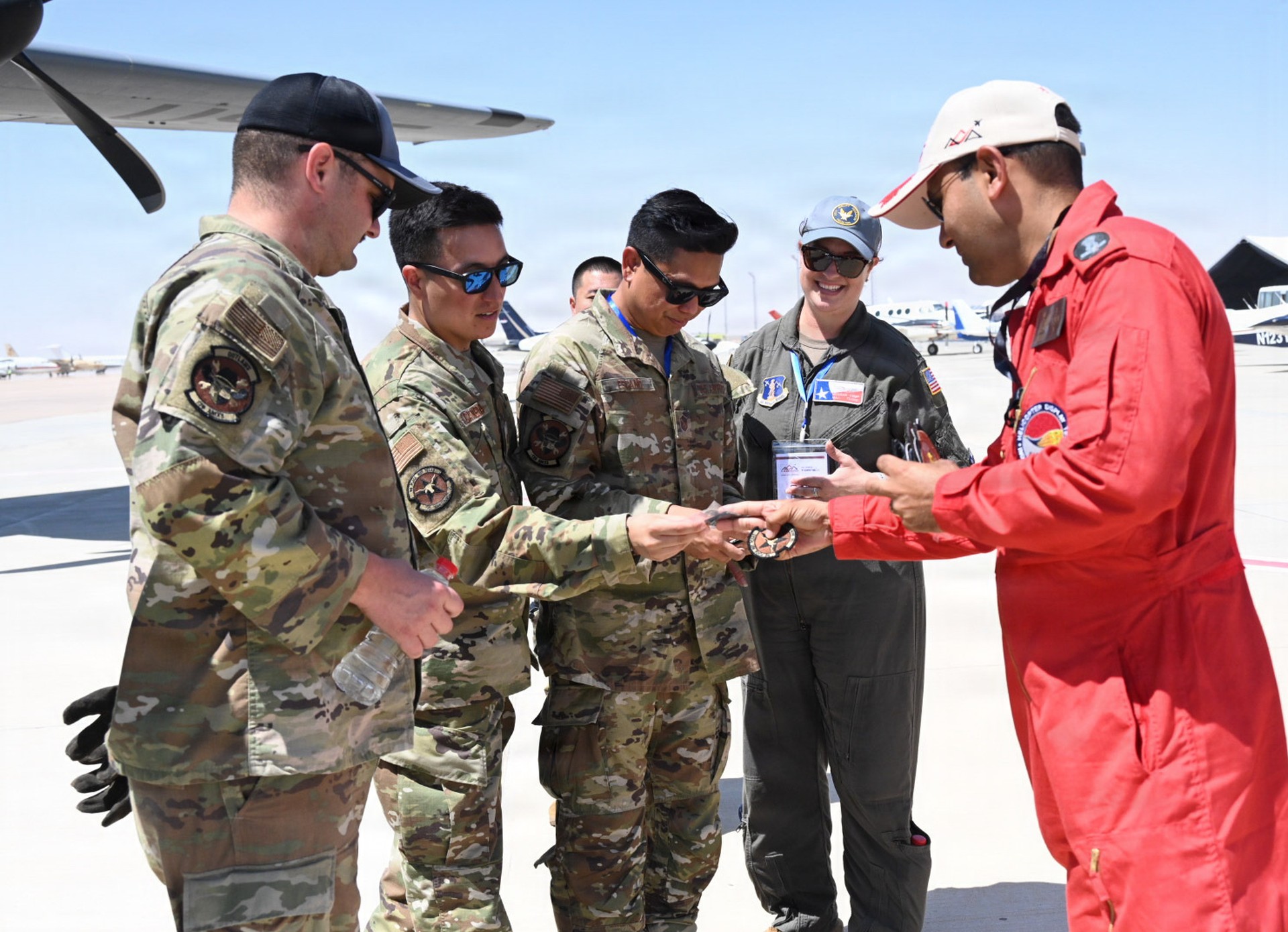
On July 20, 2026, the Air Force ran an Agile Combat Employment exercise at Creech AFB using the YFQ-44A Fury. The exercise validated whether the aircraft could be generated and operated from a reduced forward logistics footprint — the basing model that the Air Force's distributed Pacific posture requires. CCAs were generated and integrated with manned platforms during the exercise. DVIDS, 432d Wing, July 2026
The ACE concept is central to the strategic case for attritable systems. An aircraft designed to accept combat attrition needs a supply chain built for manufacturing surge and forward replacement, not component-level repair and depot return. Traditional readiness metrics — mission-capable rates, mean time between failure, depot-to-field turnaround — are the wrong measures for a fleet where planned attrition is part of the operational calculus. The ACE exercise begins to define what the right measures are: how many aircraft can be generated from a minimal forward footprint, what maintenance personnel and equipment the footprint requires, and what the generation cycle time is when operating away from a main operating base.
What the exercise left open is the dual-source logistics question: Fury and Vengeance have different airframes, different ground support equipment, and different autonomy software stacks. Can they be supported from the same forward footprint? If the Air Force expects to operate both aircraft from the same distributed bases, the logistics integration burden — two maintenance specialties, two software update channels, two sets of ground control interfaces — lands on the program's support infrastructure design before the first aircraft reach operational units.
Operational testing: two aircraft, two autonomy stacks, same airspace
In September 2026, the Air Force moved both the FQ-44 Fury and FQ-42 Vengeance into operational testing with the Experimental Operations Unit at Creech AFB. General Atomics released an image of the FQ-42 Vengeance flying in formation with an F-35A Lightning II and an F-15E Strike Eagle. Anduril disclosed that the FQ-44 Fury had previously flown alongside F-35s during exercises at Creech, with results shared at the Air, Space & Cyber Conference in September. The Aviationist, September 2026
The USAF also formally named the FQ-42 "Vengeance" on September 14, 2026, replacing General Atomics' company designation of Dark Merlin. The Aviationist, September 14, 2026
Formation flights with crewed aircraft mark a qualitative advance from isolated test-range operations. Operating in proximity to F-35s in shared airspace requires the autonomy system to respond reliably to proximity alerts, formation geometry, and communications protocols shared with crewed platforms. These are solvable problems. They require the autonomy software to have been explicitly tested for that behavioral envelope, not just for the aircraft's handling characteristics against a fixed test target.
Having both aircraft in the same operational testing framework is the program's most analytically valuable configuration and its most complex verification challenge. Fury and Vengeance run different mission-autonomy software. When both aircraft are in the same airspace alongside crewed platforms, the program office needs to understand how each autonomy stack responds to the same tasking — and where their responses diverge. Divergences that remain undocumented become failure modes in exercises that haven't been named yet. The verification framework needs to treat behavioral alignment between the two aircraft as a first-class test objective, not a secondary concern.
Four acquisition challenges the program now owns
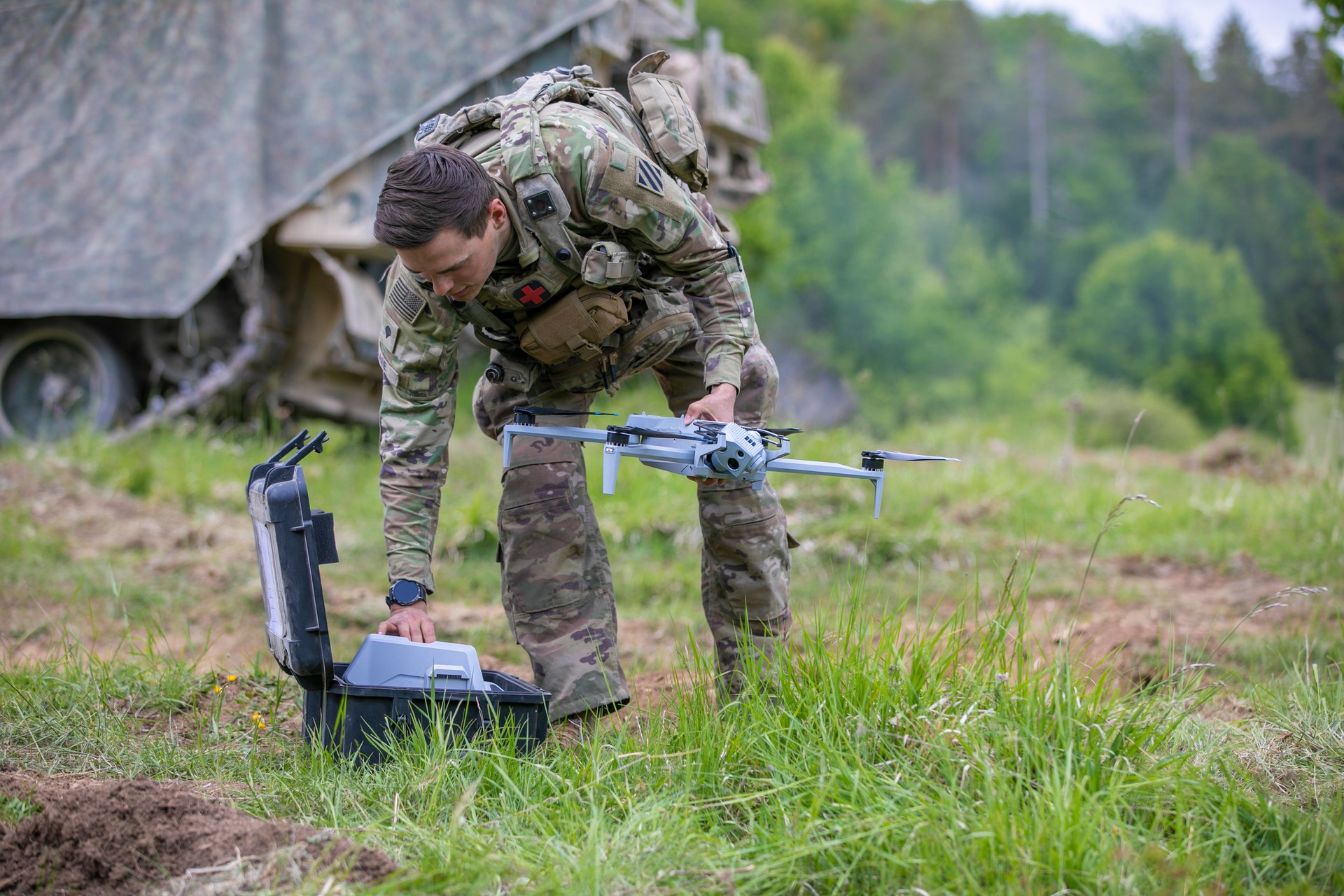
Mission-autonomy software lifecycle contracting. The Air Force structured CCA to separate the mission-autonomy software from the airframe, enabling competitive upgrades without replacing the aircraft. Realizing that advantage requires contract vehicles that support iterative software release, version control across a multi-aircraft fleet, and rollback procedures for software that produces unintended behavior in operational conditions. Traditional fixed-price hardware contracts are the wrong model. DoD's Software Acquisition Pathway (DoDI 5000.87) provides a statutory framework; adapting it to an attritable fleet at this scale has not yet been tested.
Dual-source version management. Two aircraft with two autonomy stacks in the same tactical environment create configuration management requirements with no clear precedent in Air Force aircraft programs. The program office needs to define which behaviors must be common across Fury and Vengeance — rules of engagement compliance, collision avoidance protocols, formation spacing standards — which are platform-specific, and who has authority to change each class of behavior without full requalification. Those boundaries need to be established before operational testing uncovers them the hard way.
Attritable O&S planning. The standard acquisition life-of-type model assumes a fixed number of aircraft managed through maintenance and upgrades until retirement. For an attritable fleet, the model is continuous manufacturing with combat losses accounted for in procurement planning. Contractors in the supply chain need to be designed for manufacturing surge capacity and rapid part production, not depot-level repair of individual aircraft. The industrial base infrastructure that supports a 1,000-aircraft attritable fleet looks different from the one that supports a 300-aircraft conventional fleet, and that planning needs to begin before the supply chain is built to the wrong template.
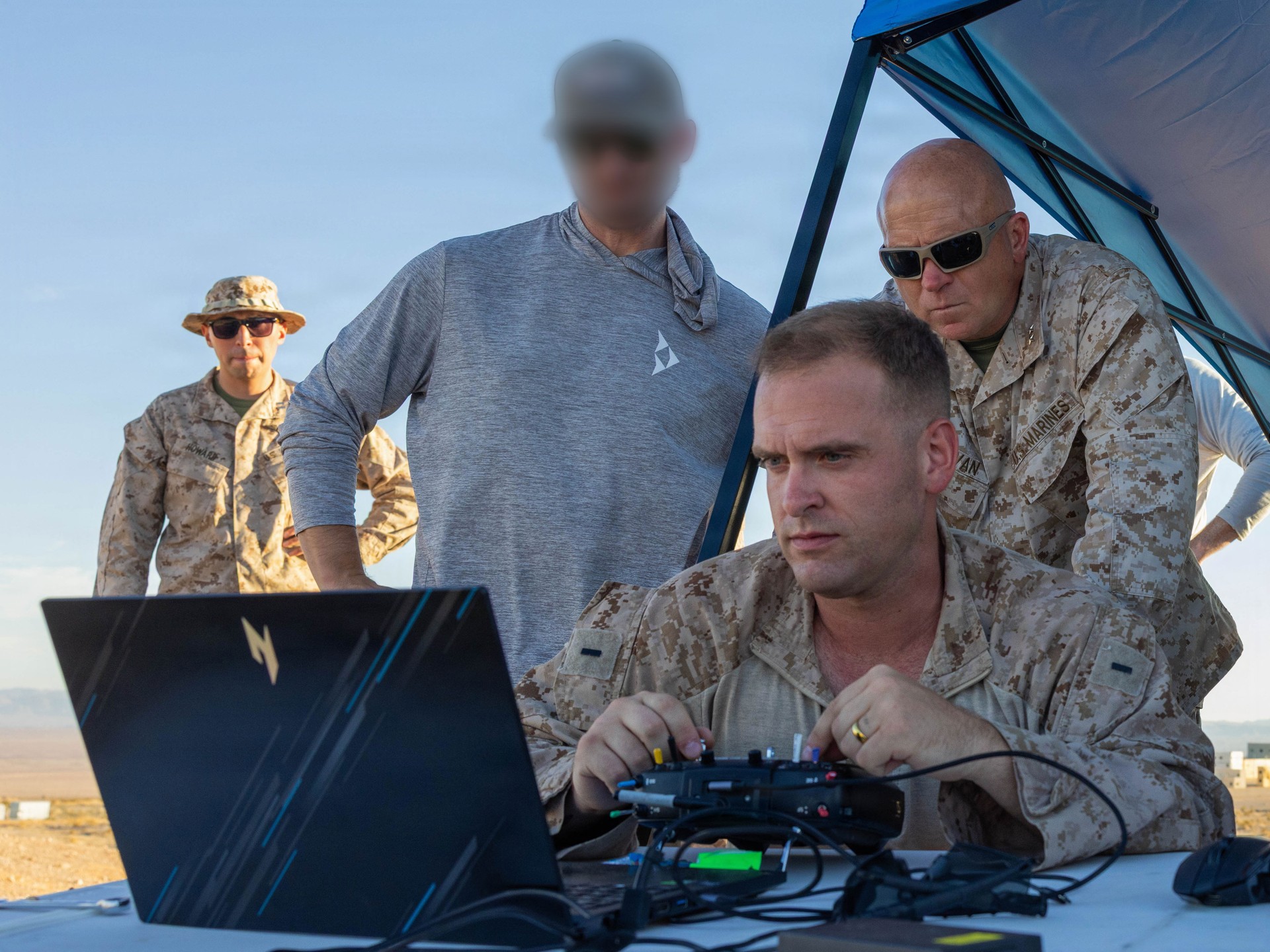
Autonomy assurance for iterated software. Fielding autonomous aircraft carrying weapons requires demonstrable evidence that the autonomy software behaves as intended across the range of conditions it will encounter. The challenge is that for a software-defined fleet, "as intended" is a moving target across software versions. The test and evaluation infrastructure — hardware in the loop, scenario injection, regression testing across versions — needs to be designed as part of the program's ongoing architecture, not a one-time certification event. Each software update that changes decision-making behavior needs its own bounded verification before fielding. That is a sustained engineering cost that current program budgets may not fully account for.
Sources and further reading
- Air Force Materiel Command, "Air Force conducts live-fire test for Collaborative Combat Aircraft program," July 15, 2026: afmc.af.mil
- Defense News, "US Air Force awards first CCA production contracts to General Atomics, Anduril," June 18, 2026: defensenews.com
- Air and Space Forces Magazine, "Air Force Wants Nearly $1 Billion to Start Buying CCAs in 2027": airandspaceforces.com
- Air Combat Command, "Collaborative Combat Aircraft program progresses through deliberate weapons integration testing," February 23, 2026: acc.af.mil
- DVIDS, "YFQ-44A Fury Conducts Agile Combat Employment Operations at Creech AFB," July 2026: dvidshub.net
- The Aviationist, "FQ-42 Vengeance CCA Flies Alongside F-35 Lightning II and F-15E Strike Eagle," September 21, 2026: theaviationist.com
- DoDI 5000.87, "Operation of the Software Acquisition Pathway," October 2, 2020
The autonomy assurance and software lifecycle challenges the CCA program is now working through are directly relevant to Spartan X's practice at the intersection of AI verification and defense acquisition. Building evidence that an autonomy stack behaves correctly within its specified parameters — and maintaining that evidence through software iterations — is the specific gap between demonstrated flight test results and the authorization to employ that capability in combat. Spartan X's approach applies structured AI verification methods to the contracting and program management structures defense programs actually use, rather than treating verification as a separate technical exercise.