The feature supports specific administrative work
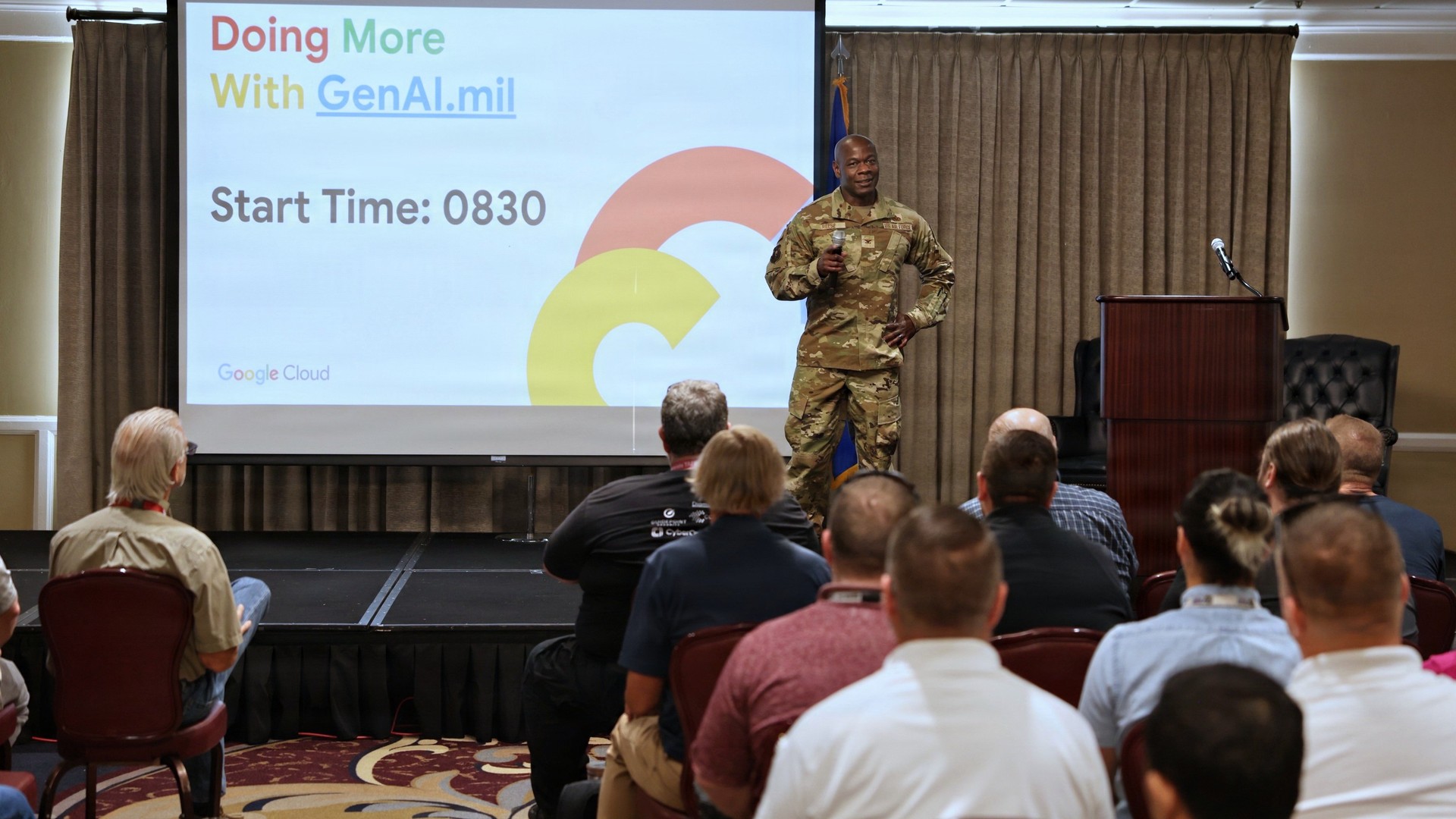
Google's March 10, 2026 announcement describes Agent Designer as a no-code or low-code feature within Gemini for Government on GenAI.mil. It gives examples such as drafting read-aheads and action items, preparing award submissions and breaking project goals into tasks.
The announcement also reports that GenAI.mil had surpassed one million unique users and was offered to a workforce of more than three million. That is evidence of broad availability and interest. It does not mean three million people had created agents, that every user was active daily or that every assistant could independently act in external systems.
The distinction matters because the word agent covers different capabilities. A reusable drafting assistant and a tool with authority to change records create different obligations. Governance should follow what the tool can actually do.
Do not confuse a reusable assistant with unrestricted action
The launch examples concern administrative assistance. A program should not infer access to scheduled execution, external writes or broad system permissions from the feature's name. If a particular deployment adds those capabilities, its review should address them explicitly.
Even a read-only or drafting tool can cause harm through an incorrect summary, omitted requirement or misleading reference. The review question is what the output supports and who checks it before it becomes an official product. A human in the process is helpful only if that person has the information and time needed to review the result.
For tools that can take actions, the controls must also cover authority, approval, reversibility and failure handling. These are capability-specific requirements, not assumptions that all assistants already possess the same autonomy.
The ownership problem arrives before the scale problem
An assistant can become useful enough that a team depends on it while its creator is the only person who understands its instructions or sources. A transfer, reorganization or model update can then leave a small but important workflow without an owner.
The remedy is practical. Record the task, responsible owner, permitted data, output reviewers, dependencies and a replacement contact. Keep a short description of what the tool must not be used for. Store representative examples that show acceptable performance and known failure cases.
That record should be proportionate. A personal drafting aid does not need the same process as a shared workflow supporting a consequential decision. But every shared operational dependency needs someone responsible for maintaining or retiring it.
A central platform helps only when controls are used
An enterprise platform can offer common identity, access and oversight mechanisms. It does not prove that every agent is inventoried, every relevant event is logged or every deployment has a complete evaluation history. Teams need to confirm what the actual environment exposes and how their procedures use it.
Model changes deserve particular attention. An instruction that worked well with one version may produce different behavior with another. Changes to source files can have the same effect. Rechecking a small, representative set of tasks is often more useful than asking users whether the tool still feels good.
Useful checks include factual fidelity, retention of qualifications, correct source references and consistent handling of missing information. Review should also assess the effort required to correct the output. A fast draft that creates a longer verification task may not improve productivity.
A simple lifecycle for a shared assistant
- Register it. Identify the owner, intended users, task and approved data boundary.
- Test it. Use representative normal cases, ambiguous inputs and missing information.
- Define review. Explain who checks outputs and which decisions remain outside the tool's authority.
- Monitor change. Reevaluate when models, instructions, source material or permissions change.
- Transfer or retire it. Reassign ownership when staff move and remove tools that are no longer supported.
Training should help users recognize the difference between a useful draft and a verified result. The organizational goal is not merely more agents. It is more completed work with an understandable error rate, appropriate review and less total effort.
Sources and further reading
- Google's Agent Designer announcement — feature scope, examples and reported adoption
Spartan X's AI consulting and program-execution disciplines make these tools maintainable beyond their first enthusiastic user: a defined task, tested behavior and ownership that survives the next personnel or platform change.