Read capacity, inventory, and cost separately
CPS, or Conventional Prompt Strike, is the Navy's long-range conventional hypersonic capability. GAO describes planned integration on all three Zumwalt-class destroyers, followed by selected Virginia-class submarines. Those planned hosts make ship readiness and weapon readiness inseparable parts of the delivery schedule. GAO program assessment
GAO reported a production-capacity shortfall, an April 2026 estimate of $63 million to $71 million per missile, and more than $41 billion in planned Navy life-cycle costs. It also found a 24-month delay in Zumwalt modernization and a shift in the first shipboard CPS flight test from 2025 to 2027. These figures describe different things: facility capacity, an estimated unit cost, long-term program cost, and separate schedules. GAO-26-107974
The distinctions matter. Maximum annual capacity does not establish accepted output, and accepted output is not automatically available operational inventory. Tests, training, maintenance, configuration changes, and other program needs can draw on production. A useful inventory forecast must identify those demands explicitly rather than divide a desired loadout by a headline rate.
Cost estimates also depend on what is included and on assumptions about quantities and production efficiency. The April range should not be presented as a fixed future price, while life-cycle cost should not be divided by rounds and labeled a manufacturing unit cost.
Successful tests do not finish development
CPS has demonstrated important progress, including successful flight testing. GAO nevertheless describes continuing testing, production, reliability, and integration challenges. The program has not cleared every technical milestone simply because the underlying concept has flown. GAO assessment
That is the critical transition in advanced acquisition. A demonstration establishes something valuable about a particular configuration under tested conditions. Repeatable production and operational availability demand additional evidence. Requirements, design stability, supplier readiness, quality, trained personnel, and platform integration all affect when a capability can be used and sustained.
It is equally misleading to assign every schedule delay to the factory. Missile development, test assets, funding, and ship modernization have their own dependencies. If the ship and weapon schedules are managed separately, one can appear healthy while the combined capability continues to move right.
Manufacturing belongs in the capability decision
GAO identifies labor-intensive work, difficult production instructions, and quality and material-management problems among the factors affecting output. Its broader recommendation is a comprehensive strategy coordinating investments across the programs required to field CPS; the department concurred. GAO findings and recommendation
The implication for program leadership is not that a single management slogan can remove complex engineering work. It is that an intended operational quantity needs a credible industrial basis before that quantity becomes a strategic assumption.
A production plan should make the evidence visible: demonstrated performance, accepted output, the assumptions behind an increase, and the time required for funded improvements to take effect. A revised contract can assign responsibilities and resources, but the plan still needs proof that the limiting constraints are changing.
Treating rate as a late delivery issue invites a predictable mismatch. The requirements process can specify an impressive individual system while leaving the force unable to obtain enough supportable systems within its planning horizon. Manufacturing capacity and sustainment deserve explicit attention alongside technical performance from the outset.
Shared hardware creates shared decisions
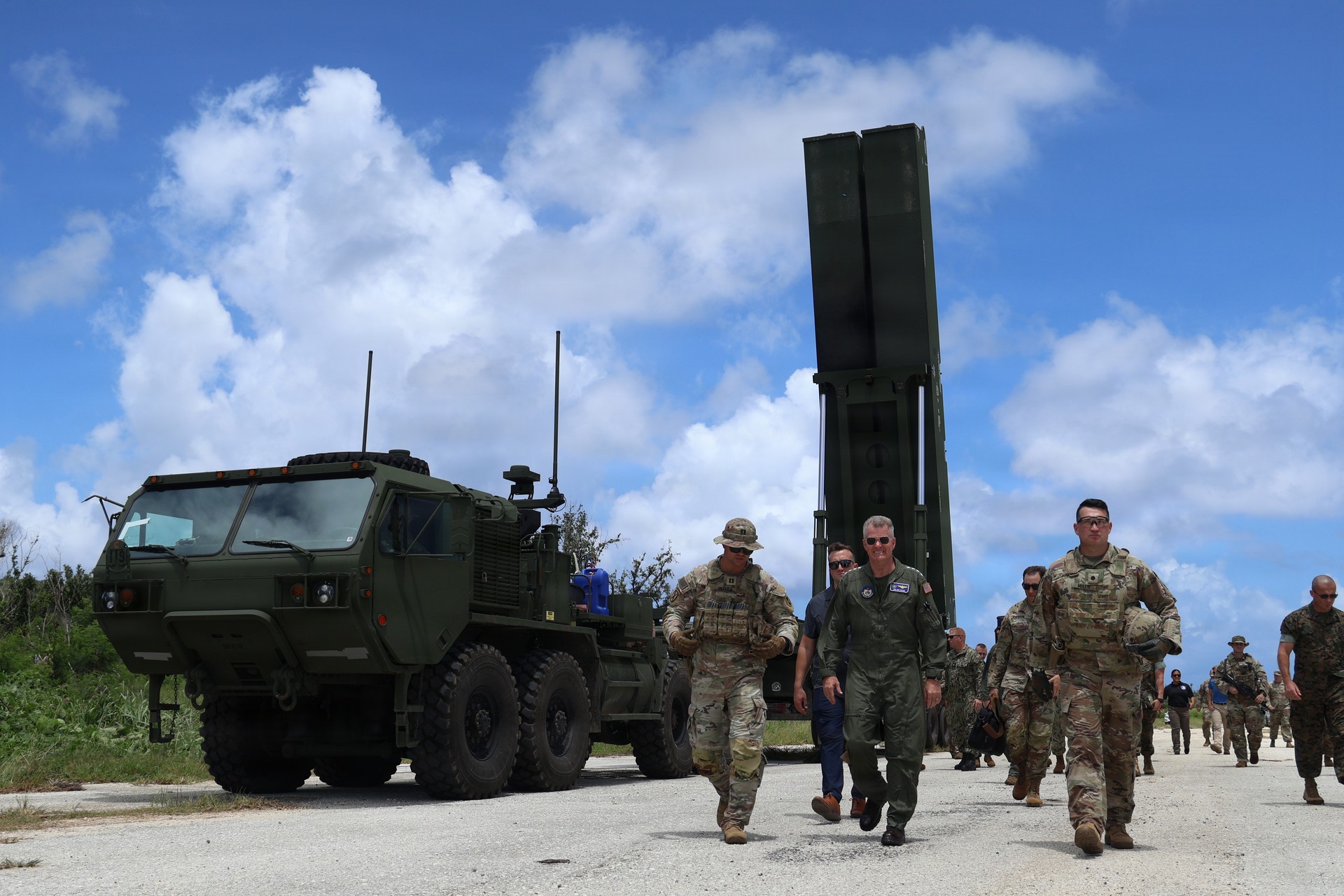
The Navy's CPS and Army's Long-Range Hypersonic Weapon efforts share missile development and production responsibilities. That relationship makes a service-by-service view incomplete: changes in demand, testing needs, or investment timing can affect the same industrial resources. GAO program responsibilities
The appropriate response is a coordinated investment and delivery picture. Each service needs visibility into what its decisions assume about the other, what resources are shared, and how competing requirements will be resolved. Joint oversight is useful when it produces timely choices, not simply another reporting forum.
Sentinel offers a separate caution about estimation and program maturity. The department's July 2024 Nunn-McCurdy review estimated a reasonably modified program at $140.9 billion, 81 percent above its September 2020 baseline. That historical estimate does not prove that Sentinel and CPS have identical causes or that it is Sentinel's current final cost. It does show why comparisons need a dated baseline and an explanation of scope. Official Sentinel review announcement
Five decisions a portfolio review should resolve
- Define the usable capability milestone. Identify what must be ready together: the platform, accepted equipment, trained personnel, support arrangements, and required approvals.
- Reconcile the demand picture. Distinguish operational inventory from test, training, development, and sustainment needs.
- Separate demonstrated capacity from planned capacity. Show which improvements are funded, what assumptions they carry, and what evidence will confirm the gain.
- Connect schedules across programs. Make shared dependencies and responsibility for resolving conflicts explicit.
- Review alternatives using consistent costs. Compare the consequences of different investment and delivery choices without mixing procurement, unit, and life-cycle estimates.
These decisions will not eliminate technical uncertainty. They make the uncertainty usable for leadership: a reasoned basis for where to invest, what to prioritize, and which dates can responsibly support planning.
The strategic measure is dependable availability
A small initial inventory can have value; calling it merely a demonstration asset overlooks that possibility. Its contribution still depends on readiness, support, and the role assigned to it. Public production figures alone cannot establish whether a particular operational requirement is met.
The broader lesson is to treat industrial performance as part of the capability being acquired. The next major program should be able to explain not only what its system is designed to do, but how the organization expects to deliver and sustain the required quantity. CPS makes that question immediate across the Navy, Army, and their shared industrial base.
Sources and further reading
Spartan X's program execution and logistics expertise connects technical milestones to the resources and delivery assumptions behind them. That portfolio perspective helps leaders distinguish promising progress from dependable capacity and direct attention to the decisions that determine readiness.