Why SOF Logistics Is a Distinct Problem Class
Conventional logistics operates on a relatively predictable model: establish a supply chain, protect its routes, and maintain throughput. Even under adversarial pressure, the system can absorb losses because resupply nodes are distributed, inventories are sized for disruption, and the force structure includes dedicated sustainment formations.
Special operations forces cannot operate this way. Small teams operating far forward depend on precision rather than mass. The force signature created by a conventional resupply convoy or helicopter — radar, radio emissions, acoustic, thermal — is incompatible with the concealment requirements of many SOF missions. In a peer or near-peer conflict, that signature is not just a tactical risk; it is a direct threat to the mission and the force. Army doctrine and multi-domain operations planning have consistently identified SOF-conventional force integration as a persistent challenge, and one of its downstream requirements is a logistics interface that does not require bringing a conventional tail within signature range of forward SOF elements.
Autonomous UAS resupply offers a potential solution, but the operational requirements shape the technology challenge in ways that generic cargo drone programs do not address well:
- Navigation without GPS dependency. GPS-denied and GPS-degraded environments are not edge cases for SOF operations — they are the baseline assumption in peer competition, particularly in the European theater where the 10th SFG specializes. A resupply UAS that depends on GPS for navigation and landing precision fails before it leaves the launch site. The Army's Ground Emplaced NAVWAR systems, also tested at PC-C6 by the 4th Infantry Division, are part of the same experimental program addressing this environment — the pairing is not coincidental.
- Minimal communications footprint at the delivery point. Standard cargo UAS architectures communicate with ground control stations throughout the flight. That radio frequency profile is detectable and geolocatable. A SOF resupply UAS needs to operate with minimal, burst, and encrypted communications — or in fully autonomous mode across part of its flight envelope — without requiring the receiving team to transmit.
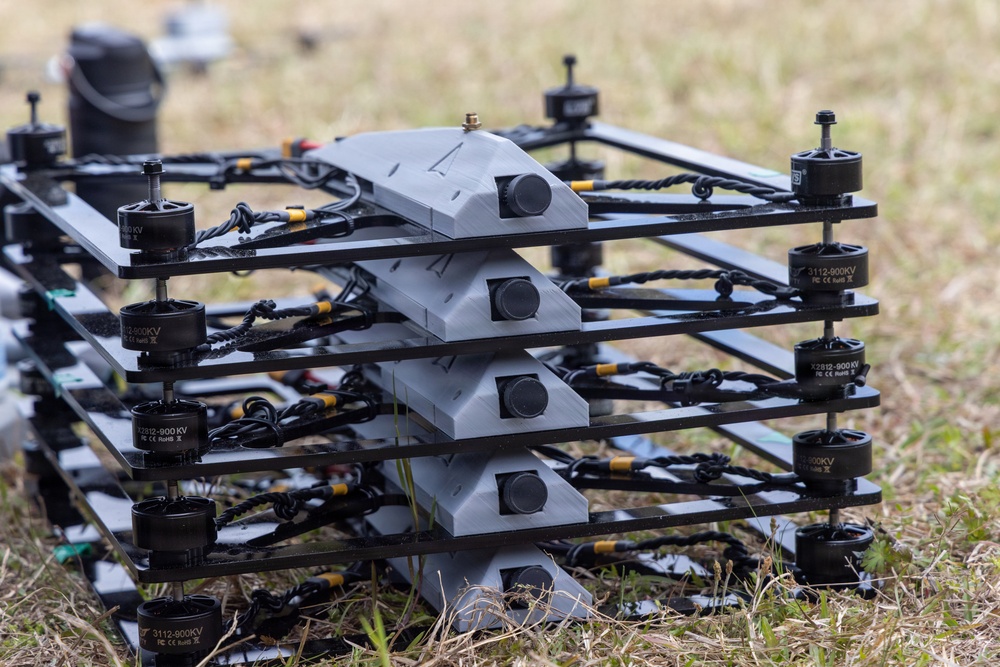
- Payload flexibility. The priority resupply items for SOF vary significantly by mission: batteries, specialized ammunition, medical supplies, water, communications equipment. A system optimized for a single payload class misses the flexibility requirement. This constrains the aircraft design toward modular payload bays and precise landing rather than bulk delivery.
- Survivability in contested airspace. Any autonomous resupply system reaching forward SOF elements must either operate below threat radar detection thresholds or accept a limited survivability envelope. The design tradeoff between payload capacity, range, and low-observable performance is more demanding for this mission than for conventional rear-area logistics.
- Integration with SOF command and control systems. SOF teams use specific C2 toolsets — ATAK, the Tactical Assault Kit ecosystem, and capabilities under USSOCOM's Program Executive Office for SOF Digital Applications including the CHAOS (Collaborative Heterogeneous Autonomy Operations Software) platform. A resupply UAS that cannot communicate its location, payload status, and delivery confirmation through those existing interfaces adds integration burden rather than capability.
What PC-C6 Tested
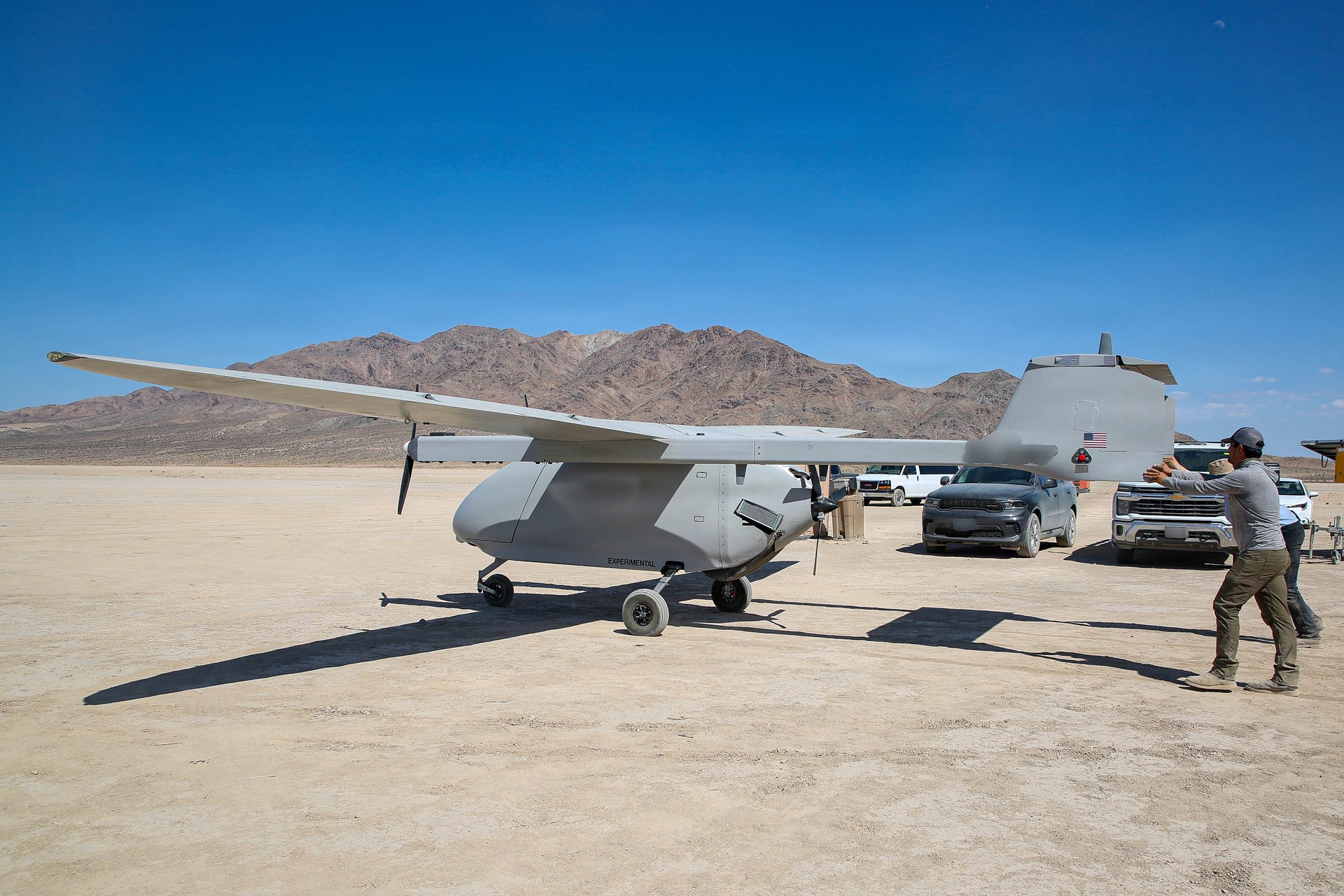
The 10th Special Forces Group is the Army's force for European theater operations, with particular expertise in mountainous terrain, cold-weather warfare, and integration with NATO and partner nation forces. Its participation in Project Convergence Capstone 6 at Fort Irwin, California in July 2026 placed the unit in a controlled but operationally realistic environment designed to stress-test emerging technology against combined-arms scenarios.
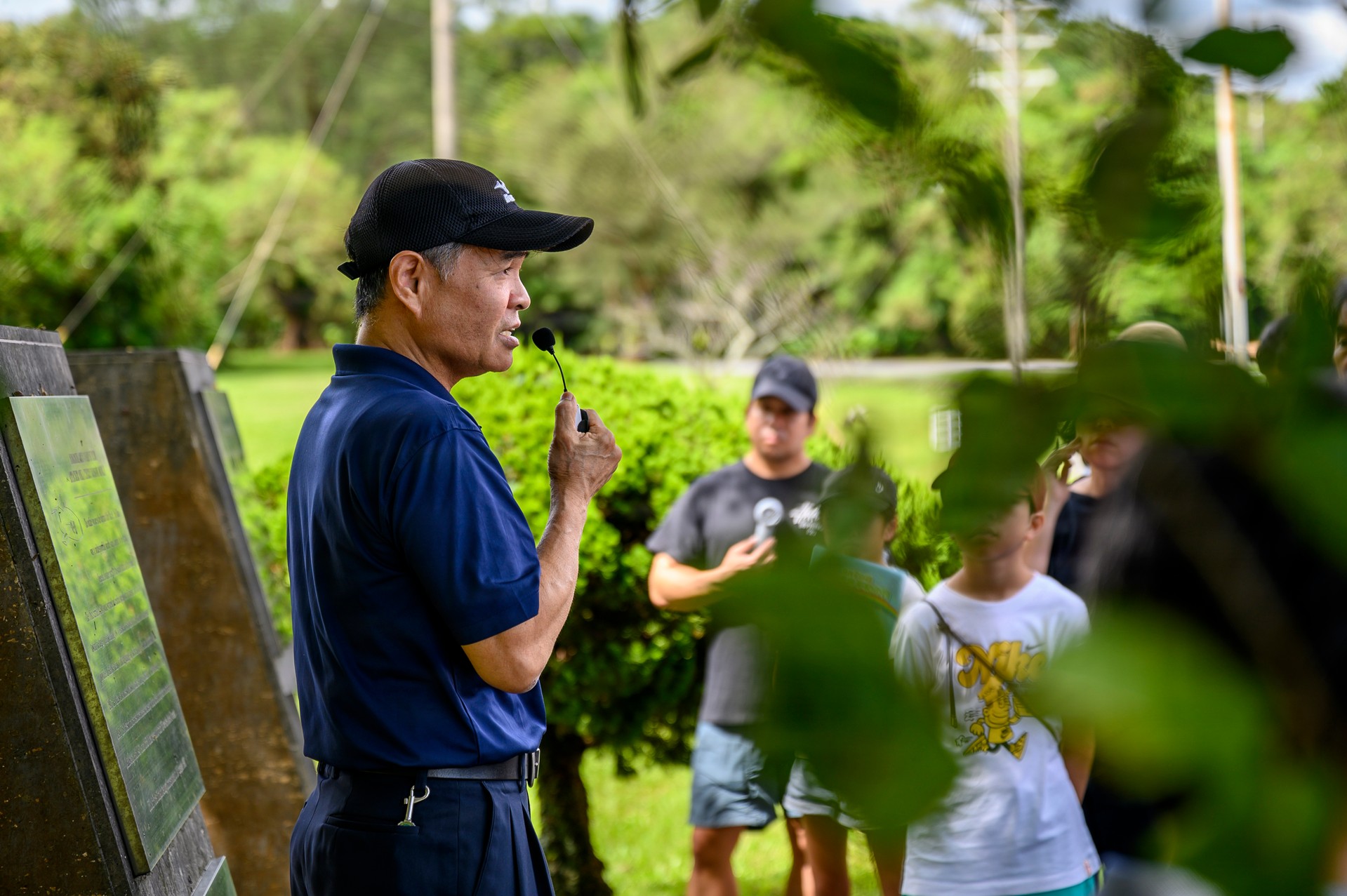
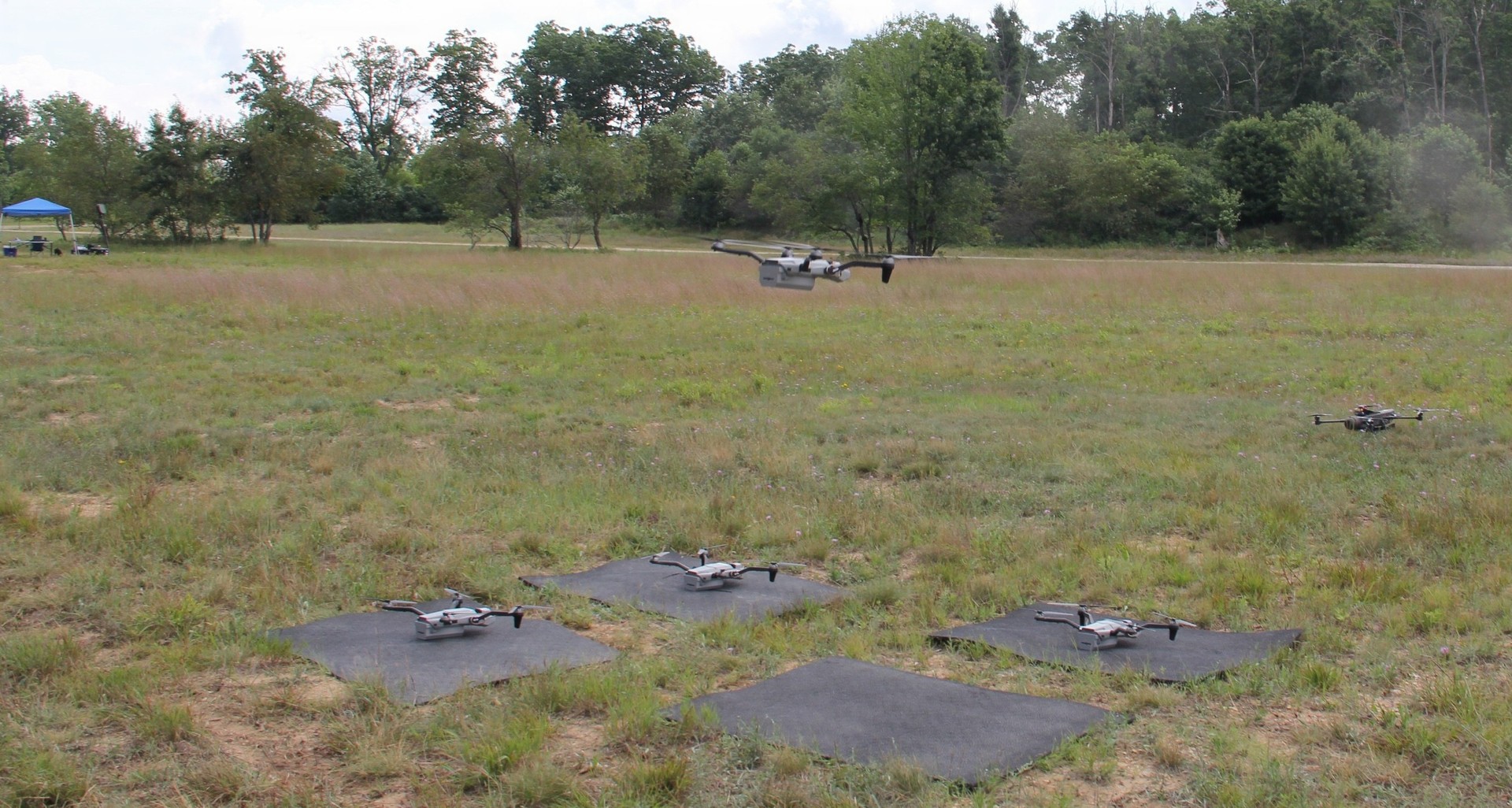
According to DVIDS documentation of the exercise, PC-C6 enabled the 10th SFG to assess emerging autonomous technologies focused specifically on resupply capability enhancement. Civilian engineers worked alongside military personnel on the ground, with at least one unmanned aircraft system prepared for takeoff under operational conditions. UK Commando Force personnel participated directly in the assessment — a detail that matters because allied interoperability for autonomous systems is not guaranteed, and early testing with allied forces surfaces interface problems that purely domestic tests would not catch.
The Army Reserve's 304th Cyber Battalion provided cyber operations support to the Joint Modernization Command exercise control network during the same period, according to DVIDS. This integration is significant: autonomous resupply at the SOF level requires a secure, resilient C2 network, and testing the cyber operations layer alongside the UAS platform is a more complete operational test than evaluating either in isolation.
The Army has not published detailed performance outcomes from the 10th SFG's autonomous resupply testing at PC-C6. What the exercise structure reveals is the Army's seriousness about this capability: Project Convergence Capstone events are not demonstrations or marketing events. They are structured experiments with learning objectives and after-action review processes that feed into acquisition decisions. A SOF unit testing autonomous resupply at PC scale, in a multinational environment, with cyber operations support, signals intent.
The Four Requirements Gaps Acquisition Must Close
Even if the autonomous resupply technology demonstrates promising performance at Fort Irwin, several structural gaps exist between exercise performance and operational fielding that acquisition officials need to address before writing requirements.
1. Testing in genuinely denied spectrum conditions. Fort Irwin provides a controlled environment with defined threat emitters. That is not the same as the electromagnetic environment a forward SOF team faces in a peer conflict, where the adversary's electronic warfare capabilities actively hunt for signatures. A resupply UAS that performs reliably at Fort Irwin needs to be tested against high-fidelity adversary EW emitters — the kind of contested spectrum testing the 4th Infantry Division was also practicing with NAVWAR at the same exercise. The question of whether PC-C6's experimental design included adversary EW pressure on the resupply UAS during the 10th SFG testing is not answered in available reporting; it is the right question to ask of any subsequent program assessment.
2. Classification handling in autonomous systems. SOF teams operate with classified communications and mission plans. An autonomous resupply system that logs flight data, delivery coordinates, and operational patterns creates a classification handling problem: where does that data go, how is it protected, and how is it managed if the aircraft is lost or captured? These are not software engineering problems with easy answers. Any vendor proposing autonomous resupply for SOF needs a credible data classification architecture, not just a secure communications channel.
3. The human-machine interface under mission stress. The decision of when a SOF team member must authorize a resupply UAS action — and when the system can proceed autonomously — has both operational and policy dimensions. DoD Directive 3000.09 governs autonomous and semi-autonomous weapon systems, and while a resupply UAS may not be a weapon system in the traditional sense, any autonomous platform operating near an active SOF element in a contested environment needs a clear human-machine authority framework. The policy question is not a bureaucratic obstacle; it is a design requirement.
4. The maintainability gap in austere environments. A SOF team cannot carry a maintenance kit for a complex autonomous aircraft. The system needs to be operable, diagnosable, and recoverable with the equipment the team already carries. This pushes strongly toward simplicity and modular replacement over complex autonomous maintenance, and it is a requirement that civilian cargo UAS programs designed for commercial logistics hubs are not built to meet.
What Vendors Should Understand
The SOF resupply market is not large in unit terms, but it is high-value and high-signal. A platform that successfully demonstrates capability in PC-C6-style testing creates a credible pathway to USSOCOM acquisition — and SOCOM has both unique acquisition authorities under 10 U.S.C. § 167 and a history of adopting commercial technology faster than the conventional services when the capability is clearly matched to a real mission gap.
The vendors most likely to succeed are those who approach the SOF requirement as a constrained design problem rather than a delivery of an existing product. The constraints — navigation independence, low RF signature, classified C2 integration, austere maintainability — narrow the solution space significantly. They also separate vendors who have genuinely studied SOF operations from those who are adapting commercial products with a government sales pitch.
The SOFWERX innovation hub, USASOC's S&T investment priorities, and SOCOM's PEO SOF Digital Applications ecosystem are the right integration targets. Understanding the CHAOS baseline — the government-owned autonomy software platform that SOCOM has been building toward — and designing to work within it rather than alongside it is the difference between a viable proposal and a demonstration that ends at Fort Irwin.
Operational Judgment: Where This Breaks and What Changes the Decision
This is a strong capability direction, but two conditions could reasonably shift the investment case. If adversary counter-UAS capabilities mature faster than the fielding timeline for SOF autonomous resupply, the operational utility of a survivable-but-observable resupply UAS collapses — the enemy system capable of engaging a small autonomous aircraft in contested airspace renders the approach untenable regardless of navigation and C2 improvements. That is the failure mode acquisition needs to plan around, not the nominal performance case.
The alternative approach is higher-altitude autonomous delivery with a shorter operational signature — using a larger aircraft to drop containerized payloads from above detection thresholds, with no on-target hover time. Some programs have explored this concept for conventional resupply. Whether it fits SOF signature requirements is a harder problem, because the payload must reach the team, not a general delivery point. Both approaches deserve analysis in the requirements phase rather than treating the low-altitude, precision-landing UAS as the default.
Sources and further reading
- 10th Special Forces Group Tests Emerging Technology at PC-C6 (DVIDS)
- 304th Cyber Battalion Supports Cyber Operations at PC-C6 (DVIDS)
- U.S. Soldier Uses Ground Emplaced NAVWAR System at PC-C6 (DVIDS)
- DoD Directive 3000.09: Autonomous Weapon Systems (current version, 2023)
- 10 U.S.C. § 167 — Unified Combatant Command for Special Operations Forces
Spartan X's work in DDIL communications architecture — particularly the BRIC edge compute and C3 platform — addresses one of the hardest design problems in autonomous SOF logistics: maintaining sufficient command authority and situational awareness at the edge without requiring the communications profile that adversary systems are built to detect. The constraints that define this mission are precisely the operational conditions BRIC was designed to operate in.