What happened at Lethal Eagle
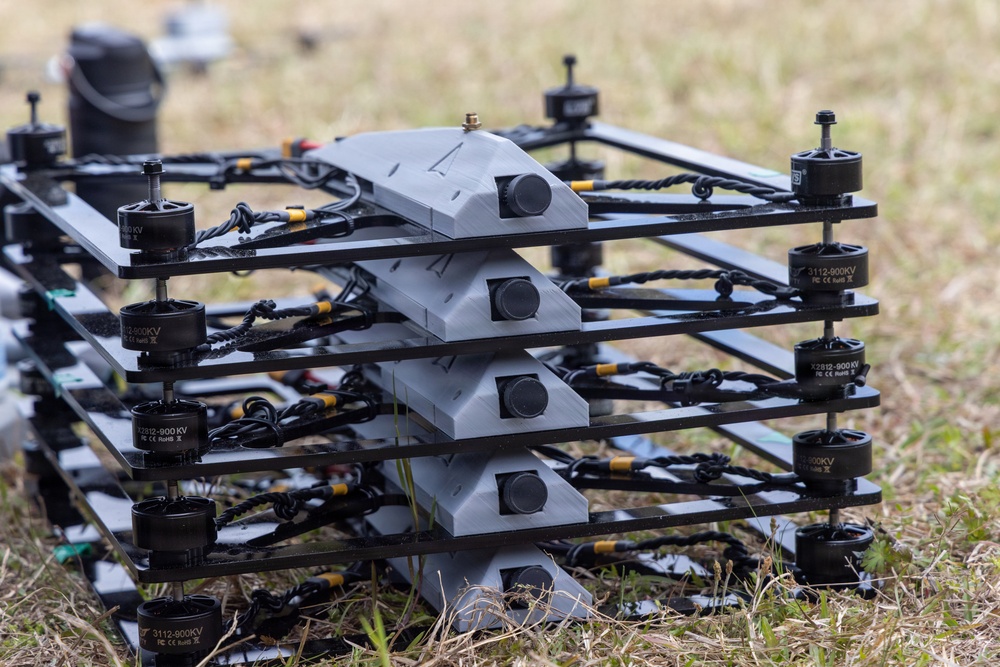
In a March 31, 2026 announcement, Northrop Grumman described Army personnel testing the Group 3 Lumberjack uncrewed aircraft through Maven Smart System during the 101st Airborne Division's exercise. The release date does not establish the precise flight date.
The company reported simulated Hatchet munition deployment, Palantir Agentic Effects Agent tools for automated detection under human supervision, continuous beyond-line-of-sight satellite communications and subsequent surveillance. It also reported development with ES Aero and Palantir from concept to first flight in under 14 months. Crucially, the release identifies the demonstrated capabilities as experimental and not currently fielded military systems.
Those details make this an integration milestone. The aircraft, communications, software and operators participated in a common workflow. They do not by themselves establish performance under communications denial, an adversary's ability to respond or the suitability of every future configuration.
The distinction also resolves an apparent ambiguity in the platform description. The company calls Lumberjack a one-way attack system while describing a demonstration involving simulated munition delivery followed by surveillance. The exercise sequence should be understood as reported; it does not establish that an aircraft expended in an impact mission would continue operating afterward.
Define what the agent is allowed to do
“Agentic” can describe very different software behavior. In a program review, the label should be replaced with a clear account of inputs, outputs, tool access and operating permissions. A tool that highlights an observation, an application that recommends an action and a system authorized to execute a function require different evidence and controls.
For this demonstration, the public release supports the narrower description of automated detection tools operating under human supervision. It does not publish a complete account of every decision node or the authority associated with each one.
That leaves useful questions for further evaluation:
- What evidence can the operator inspect before accepting a recommendation?
- Which actions require explicit approval, and how is that enforced?
- How are stale, incomplete or conflicting inputs displayed?
- What happens when a tool fails or returns an unexpected result?
- Can the operator interrupt the workflow and understand the resulting system state?
Answering those questions makes the software's role reviewable. It also helps prevent an apparently modest integration change from expanding authority without a corresponding approval and test effort.
Enterprise investment raises the cost of hidden assumptions
Maven's broader institutional direction matters because an interface used by many organizations can spread both a useful capability and an undocumented limitation. September 2026 research update: the FY2027 OSW RDT&E justification, project 668, describes a transition toward enterprise use and a program of record, with investment to expand Maven access and integrate applications.
A program of record can support more structured planning, ownership and sustainment. Funding still depends on the applicable budget and acquisition decisions. Enterprise direction also does not mean that every platform is already compatible or that one successful exercise establishes a universal integration standard.
For suppliers, the practical requirement is to obtain the actual interface and acceptance requirements for their intended integration. Open Mission Systems and the Universal Command and Control Interface can be relevant standards in defense programs, but their applicability must be established for the specific effort. A public demonstration alone does not impose either standard on every Maven-connected product.
Useful contract deliverables include interface documentation, version compatibility, configuration records, test access and the rights needed to maintain the integration. Common infrastructure becomes more valuable when these terms allow components to evolve without creating an opaque dependency on one implementation.
Human supervision needs evidence of effectiveness
DoD Directive 3000.09 requires appropriate levels of human judgment for systems within its scope, together with relevant review and assurance requirements. A description such as “AI proposes, human authorizes” is not, by itself, a compliance finding.
The concern is practical: an operator can become overloaded, misunderstand a confidence score or accept a recommendation without seeing a material limitation. Evaluation should examine workload and comprehension under the intended conditions, including how users respond when the system is uncertain or wrong.
Explainability should help the operator assess the evidence. Show relevant observations, source references, timestamps, configuration information and limitations. A generated narrative about why an AI reached a conclusion is not necessarily a faithful record of its internal process. Retained logs and traceable inputs provide a firmer basis for review than a persuasive explanation alone.
Design the next evaluation around the seams
- Freeze the tested configuration. Record the aircraft, application, model and interface versions.
- Exercise realistic limitations. Include missing data, delayed communications and unavailable services within approved test conditions.
- Observe the operator. Measure whether the person can recognize uncertainty, reject a recommendation and maintain an accurate view of system status.
- Inspect the record. Confirm that an independent reviewer can reconstruct the relevant inputs, permissions and actions.
- Retest meaningful changes. Evaluate whether a software or interface update changes behavior elsewhere in the workflow.
This work supports faster, more dependable integration by exposing assumptions before they spread across a larger user base. Lethal Eagle provides a concrete starting point: an experimental connection among a platform, a command application and AI-assisted tools. Turning that connection into a supportable capability requires sustained testing, accountable ownership and usable operating limits.
Sources and further reading
- Northrop Grumman: Lumberjack demonstration announcement, March 31, 2026
- FY2027 OSW RDT&E justification, project 668
- DoD Directive 3000.09: Autonomy in Weapon Systems
Spartan X's AI, engineering and cybersecurity practices focus on these integration seams: the evidence behind a recommendation, the boundaries on automation and the operator's ability to understand and control the resulting workflow.